











Freeday

By invitation. If you are working with agents, or want to start, you are in the right room.

Governing the
Agentic Enterprise

Almost every organisation has built an agent by now. Most never reach production, and that is rarely the model's fault: it stalls on ownership, on oversight and on who signs for it. The ones that do have one running meet the same questions again at the second and the third, only larger. You are taking on a workforce that never sleeps, never resigns and reports to nobody in particular. On 29 October we work on the operating model for it, while our own digital colleagues mind the shop.

Thursday 29 October 2026 Padel City Delft 13:30 to 19:00 By invitation

The content is done by 16:15. Padel, drinks and dinner after that, and you leave when it suits you.

Reserve my place

The companies joining us, and the ones our digital employees already work for

Pathe TUI Bitvavo Louwman ATAG Hisense BUX MyJewellery Novum Bank Landal Postcode Loterij ProRail

Almost everyone has one digital employee. Nobody yet runs their organisation with a digital workforce.

By now every organisation sees the value. A copilot is running, a chatbot takes the first line, somewhere a pilot reads documents. That part is settled, and for almost everyone that is also where it stops.

The questions only get hard when you put real volume through it. How scalable is the architecture you happened to end up with. How does one digital employee learn what another worked out. What do you take on and what do you leave alone. How do you keep it safe once it can reach live systems. And who is going to manage the dozen of them.

None of those are model questions. They are governance questions, they arrive together, and a good deal faster than most planning cycles can absorb.

What we believe

This needs a competence centre, not another project.

A project team delivers something and then disbands. What scaling needs is a standing function: one place that owns the architecture, keeps the rules in one place, decides what gets built and what does not, and answers for the digital employees the way any manager answers for a team.

It also settles the ownership question that stalls everything else. Build a capability once, agree its rules once, and let any agent with the right permissions call it. Finance stays the owner of invoice processing, customer service simply uses it, and the policy changes in one place rather than four. Without that, twelve departments each solve the same four problems and twelve agents become twelve separate liabilities.

The difference between one digital employee and a digital workforce is not technology. It is organisation.

The constraint was never the model, because everyone ends up with much the same models. The constraint is that nobody has worked out how you own, permission and account for work that no person actually performs. That is not an engineering question, which is why no engineering team is standing by to answer it. Whoever answers it first scales while the rest are still running pilots.

Everything you already know about running a team applies here.

You build an organisation around people: roles, permissions, onboarding, review, succession. Agents need exactly the same thing, and almost nowhere is it set up yet.

They should not fall ill on you

An employee off sick for three days is something you notice the same morning. A digital employee never calls in sick, and that is exactly the risk: it gets worse slowly and nobody sees it. A source system changes its answer, a rule shifts, the volume doubles. You catch that only by reviewing the work, the way a team leader listens in on calls.

They should be as good as your best people

Every manager knows who they route the difficult customers to. That judgement sits in one head and walks out of the door when that person leaves. With a digital employee the same judgement is a setting, and you copy it to every other one you run.

They need to be onboarded

A new colleague gets a buddy, reading material, accounts and a probation period. For a digital employee it comes down to four decisions: what knowledge it may use, which systems it may reach, which rules apply, and who signs off. Do that carefully once and the twelfth is quicker to start than the first.

They should learn from each other

When your best service agent works out a smarter answer, the rest hear about it at the monthly meeting, if you are lucky. Digital employees can all have it the same day, as long as they share the same capability. Skip that and twelve of them learn it twelve times over and start behaving differently.

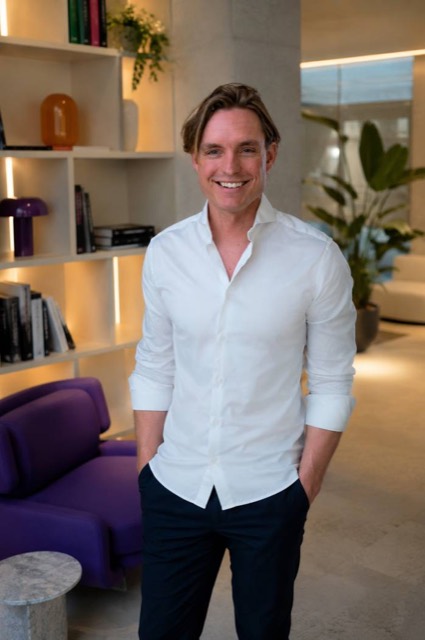
Marcus Groeneveld

Why we are doing this

Our view is straightforward. We are moving from reactive processes to proactive ones, with a personal assistant for every customer and for every employee, so people spend their time where they genuinely add value. That is worth building carefully, on European infrastructure, because a workforce you cannot audit is not one you can answer for.

We are at the front of this together and nobody knows where it ends. We are on the way. Whatever we pick up on the road we would rather learn from each other than discover twice, because we are all running into the same things.

So this is not a conference. It is a room of people one step into the same problem, telling it honestly, including the parts that did not work. You leave with a better sense of where you make the most impact. And then padel, because a conversation simply runs easier once you have just given away a point together.

Marcus Groeneveld, co-founder of Freeday

What we keep hearing

If two of these sound familiar, this afternoon is meant for you.

Scaling

Two teams built the same integration a month apart. Neither knew.

Build or buy

We ran a dozen pilots. Almost none of them are in production.

Permissions and ownership

Legal keeps asking who is accountable when an agent acts on its own.

Build or buy

I cannot get budget without a business case the board believes.

Permissions and ownership

Our data cannot leave Europe, and nobody can prove that it does not.

Scaling

We lost track of which agents still run, and who owns them.

Two sessions, and you do both.

01

Scaling to a digital workforce

Philip Verdonk and Eric Groot

What breaks when you go from one agent to ten, and who signs off?

You leave with a way to run digital employees as one workforce rather than twelve loose bots.

What we cover

Running one agent is straightforward. Running ten across four departments is not, because the same integration gets built twice, the permissions end up owned by nobody, and a single policy change means editing it in four places.

You see the alternative live: a customer service agent calling the invoice capability that Finance owns, with no rebuild and no second copy.

Permissions, ownership and who signs off are part of this session, not a closing slide. Which agent may reach which system, who owns a capability two departments both use, who is accountable when an agent acts on its own, and which provisions of the AI Act genuinely touch your architecture and your choice of supplier. Bring your compliance or privacy colleague: this is the session where their question gets answered.

02

When to build, when to buy

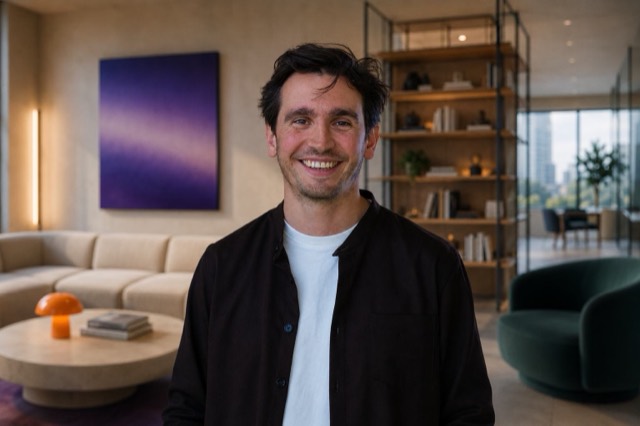
Mark Jan van Kampen and Karan Ramsodit

What does it really cost to keep an agent running for three years?

You leave with a build-or-buy case your board will accept, worked through on the calculator for your own use case, with the full running costs in it.

What we cover

Buy where you are automating back office. Build where the technology is genuinely your edge. That rule is the easy half. The hard half is the sum underneath it, because the comparison only holds if everything is in it: going live, staying live, monitoring, model changes, where the data sits, and the people doing that work every week for the next three years.

And it stays a resource problem. Whichever way you decide, someone has to be free to do it, and that is usually the binding constraint long before the budget is. Every table runs its own use case through the calculator, with the full cost in it.

What is on the table

01How do you get the change started?

What do you buy, and what do you build yourself?

The build is the smallest part of the bill. What follows runs for three years: monitoring, model swaps, a source system that changes its answer, and somebody who has time for it every week. That second sum is missing from almost every business case we see.

What do you need to know about the AI Act?

The transparency duties have applied since this summer to anything a customer talks to, and the high-risk obligations have just moved to December 2027. That does not change whether you have to arrange something, only in what order.

02How do you build the workforce itself?

How do you handle more than one model?

Every model you add is its own set of prompts, its own set of tests and its own retirement date, because vendors switch old versions off. So the question is not which model is best, but how many models you can keep running.

What do you do with your data?

Three things to settle before anything goes live: which fields an agent may read from a source system, where conversations are kept and for how long, and whether your vendor may use your data. That last one sits in your contract, not in your architecture.

03How do you get them working together?

How does your workforce learn from each other?

A better phrasing, an exception nobody saw coming, a stricter check. If twelve agents each hold their own copy, you make the change twelve times and they still drift apart. If they share one capability, it is one change.

Who owns a capability that two departments both use?

Finance builds the invoice check, customer service uses it. So who decides on a change, who gets up when it falls over, and whose budget carries it? Those are three different answers and they are rarely written down anywhere.

The questions we put to the tables
  • How far along is your organisation really, from first agent to workforce? That is the wall you pass on the way in.
  • What breaks first when agents multiply: ownership, permissions, quality or cost?
  • Which capability has your organisation already built twice?
  • What evidence about AI value actually survives a board conversation?
  • Where does a person keep the final say, and where is autonomy fine?

Who leads it

The people who do this work in live deployments, not the people who present about it.

Marcus Groeneveld
Marcus Groeneveld CEO and co-founder, Freeday Opening keynote
Mark Jan van Kampen
Mark Jan van Kampen Head of Product, Freeday Build or buy
Philip Verdonk
Philip Verdonk Solution Architect, Freeday Scaling
Eric Groot
Eric Groot Head of Commercial, Freeday Scaling
Karan Ramsodit
Karan Ramsodit Senior software engineer and technical security officer, Freeday Build or buy

The afternoon

13:30Doors, coffee and badges.
14:00Keynote, then both working sessions.
16:30Tournament, drinks and live demonstrations.
18:00Walking dinner, prizes at 18:15, close at 19:00.
Full run of show
13:30Doors open. Coffee and badges.
14:00Opening keynote by Marcus Groeneveld: from one digital employee to a digital workforce.
14:35Working session, round one. Two rooms.
15:20Break. Coffee comes to the rooms.
15:30Working session, round two. The groups swap.
16:15Content ends. Tournament kick-off, and you are free from here.
16:30Padel, drinks and the demo corner.
18:00Walking dinner.
18:15Prize ceremony.
19:00End.

The padel tournament

Three courts, fixed pairs, short games. Win and you move up a court, lose and you move down, so after a couple of rounds you are playing against people at roughly your own level. You get paired with someone from another company, which is the point.

Next to them is a training court with an instructor, open all afternoon and free to walk on and off. Padel experience is not required, which is what the training court and the instructor are for. You will certainly not be the only beginner. Rackets and balls are provided.

The bar and the demo corner sit alongside the courts, so you can skip the playing entirely and still be part of it.

There is a prize for the winning pair.

The name is the argument

Take a Freeday.

Freeday builds digital employees for large organisations. A Freeday is also a day off, which is no coincidence: it is the name of the company and the whole point of it, so on 29 October we apply it to ourselves.

While the room is on court, our digital colleagues are handling customer contact, matching invoices and closing tickets. Nobody is watching a dashboard and nobody is on standby, because a workforce that needs supervision is not yet a workforce. It is a prototype.

That distinction is what the afternoon is about.

A Freeday astronaut by a pool, reading a paper about the four day workweek

Practical

Padel City Delft is reserved for us alone: foodbar, drinks, a long table for dinner and the courts right beside it.

When

Thursday 29 October 2026. Doors at 13:30, programme starts at 14:00 sharp. The content ends at 16:15, after which you are free to play, watch or leave. Close at 19:00. Put it in your calendar.

Where

Padel City Delft, Schieweg 15, hall S19, 2627 AN Delft.

Cost

Nothing. Attendance is by invitation.

Language

The programme is in English. This page also exists in Dutch.

Bring

Colleagues are welcome. Put their names on the form.

Register by

Thursday 22 October, so the badges are ready.

Getting there

By car

Free parking on the PreZero, Sita and Suez site. Put Schieweg 60, Delft into your navigation, and it is a five minute walk from the car park.

By train

Delft Campus station is a ten minute walk, on the Sprinter between The Hague and Rotterdam. From Delft Centraal it is 1.7 kilometres, so a taxi or an OV-fiets.

Once you are there

Padel City sits on the Kabeldistrict site, in hall S19.

Do I need padel experience?

No. Next to the match courts there is a training court with an instructor that you can walk on and off, rackets and balls are provided, and you will certainly not be the only one doing it for the first time. Watching from the bar or the demo corner is a perfectly good way to spend that part of the afternoon too.

Can I bring more than one colleague?

Yes. Put their names on the form and we will have badges ready for all of them. Two or three colleagues from the same company works well, because most of these questions sit between people. Above four we will give you a call, because the room stays small.

What should I wear?

Whatever you would wear to the office. Bring sportswear and indoor shoes if you want to play.

Who should I bring?

Whoever holds the other half of the problem. Plenty of these questions sit between two people, and the afternoon works better if both are in the room.

Do I have to stay the whole afternoon?

The content runs from 14:00 to 16:15. The tournament, drinks and dinner run until 19:00, and you leave when it suits you.

I have a dietary requirement.

Put it on the form. Dinner is a walking dinner with no seating plan, so almost anything can be arranged.

Will there be photos?

Yes, there is a photographer on site for the recap afterwards. Tell us at the desk if you would rather not be in them and we will keep you out.

Who do I contact?

Reply to your invitation email. It reaches the people running the day.

Pictures from the afternoon

Reserve your place

We keep the room small on purpose, so the conversation can stay open. You leave with something concrete and with the people working on the same thing, because everyone in that room is in the same boat. Bring the colleagues who belong at your table.

Go to the form